Target layerL4 · SMASSMAS
- Duration
- 40-60 minutes depending on area
- Recommended sessions
- About once a year recommended
- Downtime
- Immediate return to daily life; temporary swelling or tingling possible
Dr. Kim Tae-hoon, Medical Director · Reviewed by our medical director
Board-certified dermatologist · review date to be posted
Severe sagging has limits with non-surgical treatment alone — and if that applies to you, we will say so honestly.
01Overview
Ultherapy PRIME Ultrasound lifting that reaches the SMAS layer
Ultherapy PRIME is a lifting treatment that delivers high-intensity focused ultrasound (HIFU) down to the SMAS layer — the thin sheet of connective tissue beneath the skin that supports the face.
- Duration
- 40-60 minutes depending on area
- Recommended sessions
- About once a year recommended
- Downtime
- Immediate return to daily life; temporary swelling or tingling possible
- How long it lasts
- Typically 6 months to 1 year (individual results vary)
03Device & Technology
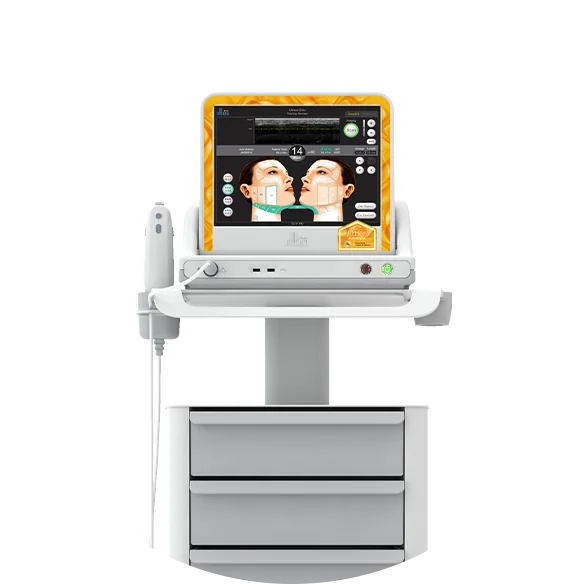
Ultherapy PRIME Device
Merz (Germany) · FDA cleared · MFDS (Korean FDA) approved
05Before / After
Before & After
Ultherapy lifting, 3-month follow-up
Clinical photos. Results vary with skin condition, age and treatment plan. Before-and-after photos are published with the patient's written consent, taken under identical conditions (lighting, angle) and never retouched. Results vary by individual.
07FAQ
Frequently asked questions
How does Ultherapy PRIME lift the skin?
It works by focusing high-intensity focused ultrasound (HIFU) down to the SMAS layer beneath the skin, creating small points of thermal coagulation. The heated tissue contracts, and as new collagen forms afterward, support develops that lifts sagging tissue. Because treatment is delivered while checking the layers on an ultrasound screen, the depth is adjusted to each person's skin thickness.
Who is Ultherapy suited to, and when is it not suitable?
We consider it for those whose jawline, cheeks, or brow line have started to sag, or who are bothered by a double chin and want to manage it without surgery. If sagging is already severe, non-surgical treatment alone has limits, and we will tell you honestly at consultation. It is not recommended if you have an implanted electronic medical device such as a pacemaker, have metal implants, infection, or wounds in the treatment area, or are pregnant.
Does Ultherapy hurt a lot? How is anesthesia handled?
Because energy reaches deep layers, there is a noticeable sensation, and how much you feel differs from person to person. Topical numbing cream is standard, and sedation support is also considered when needed. The treatment is performed directly by a board-certified dermatologist, who adjusts the intensity while watching your pain response.
How long does the treatment take?
It takes about 40-60 minutes depending on the area. Since the visit also includes consultation, topical numbing, and soothing care after treatment, your time at the clinic will be longer than this. We recommend allowing plenty of time in your schedule.
Can I return to daily life right after treatment?
Yes, you can return to daily life on the day of treatment, and you can wash your face and wear makeup. However, temporary swelling, tingling, or a muscle-ache-like sensation may continue for a few days.
When do results appear, and how long do they last?
Rather than right after treatment, results appear gradually over 2-3 months as collagen regenerates. Results typically last 6 months to 1 year, and the degree and timing of change vary by individual.
How often should I have Ultherapy?
About 1 session per year is recommended. Rather than repeating on a fixed date, we evaluate the progress from your previous treatment and then decide the timing and extent of the next one.
How is the number of shots decided?
We do not apply a set number of shots uniformly; it is decided after consultation according to the area, skin thickness, and degree of sagging. Because shots are allocated by area while viewing the layers on the ultrasound screen, the distribution may differ from person to person even for the same area.
Should I choose Ultherapy or Thermage?
It depends on which layer the sagging comes from. Ultherapy is relatively better suited to sagging of the SMAS layer, and Thermage to dermal firmness and fine lines. After consultation we recommend the device that matches the layer, and the two are sometimes planned together.
Can I have it together with Juvelook or Botox?
Because their goals differ, they are sometimes planned together. Where Ultherapy lifts sagging tissue, Juvelook addresses collagen production in hollow areas, and Botox addresses concerns related to muscle movement. Whether to do them on the same day or space them apart is decided after consultation, along with the order.
Are there side effects or precautions after treatment?
Temporary swelling or tingling may occur, and bruising or temporary reduced sensation may rarely occur. For a few days after treatment, avoid strong heat such as saunas, jjimjilbang (Korean bathhouses), and heavy drinking, and apply sunscreen of SPF30 or higher daily while collagen regenerates. If symptoms persist or worsen, please contact the clinic.
How much does Ultherapy cost, and how do I book?
The cost depends on the area and number of shots, so it is confirmed after consultation, and reference prices can be found on the price list on our website. Booking is available via Naver Booking, our KakaoTalk channel, or phone (+82-51-710-1891), and consultations are also available via LINE. The clinic is located at L Tower 10F near Jung-dong Station in Haeundae-gu, Busan.
Fees
Pricing depends on the number of shots and treatment area, and is confirmed after consultation. Reference prices are listed on our fee schedule.
See the fee schedule →References 5
- Approval: Ultherapy PRIME · FDA cleared · MFDS (Korean FDA) approved
- Manufacturer: Merz (Germany)
- Korea MFDS medical device registry — searchable by approval number
- Korean Dermatological Association — specialist credential lookup
- Reviewed by: Dr. Kim Tae-hoon, Medical Director
Summary & comparison
| Treatment | Target layer | Main change | Duration | How long it lasts | Downtime |
|---|---|---|---|---|---|
| Ultherapy PRIME ← | L4 SMAS | Ultrasound lifting that reaches the SMAS layer | 40-60 minutes depending on area | Typically 6 months to 1 year (individual results vary) | Immediate return to daily life; temporary swelling or tingling possible |
| Thermage | L2 Dermis | Monopolar RF tightening that rebuilds dermal collagen | 40-60 minutes depending on area | Typically around 1 year (individual results vary) | Immediate return to daily life; temporary flushing possible |
| Tune Face | L3 Fat layer | RF lifting that tunes texture, firmness, and contour together | 30-50 minutes | Maintained over several months (individual results vary) | Immediate return to daily life |
| Oligio | — | Monopolar RF tightening with a lighter footprint | 30-50 minutes | Several months to 1 year (individual results vary) | Immediate return to daily life |
| InMode | L3 Fat layer | RF lifting that addresses fat pockets and laxity together | 20-40 minutes | Builds over a course of sessions (individual results vary) | Immediate return to daily life; temporary flushing or swelling possible |
Treatments used for the same concern, placed side by side. Which one fits is decided in consultation after the layer is identified.
Reviewed byDr. Kim Tae-hoon, Medical Director · Board-certified dermatologist · review date to be posted
Related treatments
Next step
Wondering if this treatment fits you?
Leave your main concern and request a consultation. Suitability, schedule and fees are confirmed after review.